The above field is supplemented with consent to receive a newsletter containing information and marketing content about the cppstories.com portal from Bartłomiej Filipek codebf based in Krakow. The consent may be withdrawn at any time. See the full Privacy Policy.
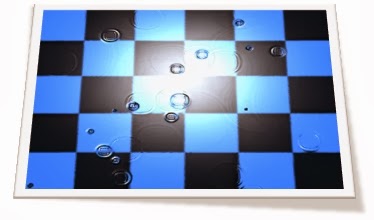
Finally I have managed to publish my awesome water simulation! I know that I wrote about my intentions to publish the project some time ago but as usually there was no enough time :)
The code is quite old and was ready something like 2 years ago. As usually I wanted to polish it and thanks to that it was blocked for too long period of time.
C++11 conformance
GCC 4.81 - 100% Clang 3.3 - 100% Intel 14.0 - 84% Visual C++ 2013 - 66% Another year is almost over so it is a good time to check what is going on with C++. This time more stats and real data compared to my post from the previous year.
How to be a better programmer? What technologies should be learned? How to have fun when coding? Read more to see where are the answers for those questions.
Intro Programmers have this wonderful opportunity to often pursue a dream career path. Lots of us would not like to only pay the bills but actually change the world as well.
When I was (re)implementing PhotoAlbum sample application I got stuck in one place. Program was about to load a list of textures (like 16 maybe) and suddenly I noticed that the whole process takes quite long time. More disappointing thing was that I got memory access errors for some images and configurations.
Recently, thanks to a contact with Packt Publishing, I got a chance to take a look at the new OpenGL book. It is called “OpenGL Development Cookbook” and contains lots of interesting ideas (40 items!) regarding graphics programming. Let us dig into book’s pages to see its real value.
The first thing: the book is a cookbook.
As it appears, our ability to code can be improved by taking some practices from martial arts! CodeKata is a catchy name for set of exercises that done regularly should make your coding skills better. Today I would like to share my “answers” to one of the Kata - karate chop, or simply the binary search algorithm.
The C++ Standard Library: A Tutorial and Reference (2nd Edition) by Nicolai M. Josuttis
We are still waiting for some more books about new C++ standard. Fortunately for us, some authors managed to write books even before C++11 is well “domesticated”. One of such examples is the book mentioned in the title of this post.
Include Guards, Pragma Once, Predeclarations and other hints that might be useful when dealing with includes.
What can we do with file including in C++? Do we need to put all the other header files of the project (plus third party libraries) in every file all the time? For sure there have to be some rules to manage that issue properly.
Mister C was a cool guy. C could make amazing things with just ordinary text files. He used to grab bunch of them and produce magic binary forms. He could make a spinning cube, web server, or even an operating system.
One time he was running through a plain header file.
This year (2012) and the previous one were good time for C++ language. We have the new standard: C++0x became C++11. What is more important is that the language will definitely not be forgotten and new ideas and plans are coming! Another key thing is that Cpp is used in a lot of new spaces - for instance in WinRT, C++ AMP, QT5 with C++11 support and more.
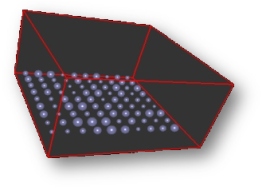
In this post I would like to share with you my thoughts and ideas behind mouse selection. This is important technique for any interactive apps.
There are several ways of doing the picking in OpenGL:
Using selection/feedback mode in OpenGL. Since OGL3.0 this feature is deprecated. I suggest not using it.
What is faster: double or float? For a long time, I’ve been simply using floats - I thought they’re faster and smaller than doubles… it is also an obvious choice in graphics programming.
But what about doubles? Are they that bad? It seems that the answers is not that obvious!